

Q&A with Elena Panaritis of Panel Group Thought For Action
CEO & Founder
Principal Series:
What if the world we think we know is only half the story?
Informality, or exclusion from the formal economy, is the world’s biggest and least understood economic crisis. At least 70% of the world’s population – that is 5.8 billion humans, spread across nearly every country – live in informality every day. They have to survive outside the protection and opportunities provided by a stable economy.
But this seemingly insurmountable problem is simpler to solve than you might imagine. At Thought4Action (T4A), our expert team, using an innovative method pioneered by Elena Panaritis, has already helped over 40 million people escape marginalization, transforming populations of informality to new, thriving middle class ecosystems across multiple cultures and countries … and we’re just getting started.
Reality Check Analysis (RCA) is an entrepreneurial, policy-based approach designed to update and redefine the global development paradigm to match today’s economic and geopolitical realities. It is simple, flexible, and universally applicable. Through RCA, we are giving humans their right of existence, creating opportunity, and increasing stability and prosperity across the globe. But we aren’t doing this alone. We are building a tribe of change agents with the vision and influence necessary to expand our real impact.
The core of our initiative is an engaging audio-visual campaign titled, 70% Informals. Our striking documentaries, engaging podcasts, and worldwide outreach are human and appropriately challenging to our often-dated understanding of progress, inequality, and belonging. We aim in transforming those who are invisible, into humans with the opportunity for prosperity, becoming part of a thriving middle-class. Such populations create global stability that is currently beyond imagination. We dare the world to believe this is possible, and we lead the way to making it reality.
Through strategic meetings, partnerships, and collaborations, we are creating real change. We already have traction with members of the G7 and G20, and with many global thought leaders. We want you to become part of this visionary tribe. Join 70% Informals, help us catalyze the global demand for transformation.
Our most immediate plans include:
- Organizing high-level meetings with leading figures to push RCA based economic policy shifts. At least one will coincide with the 2026 IMF–World Bank Spring Meetings in Washington, DC.
- Producing a series of at least eight country-based documentaries. These will expand on the heroes introduced in our first film, which reveals the hidden world of informality across the U.S., Germany, Peru, Mexico, Greece, and Tunisia. They will also drive home our core message: informality is everywhere, but so is the opportunity to fix it.
- Deploying RCA across more countries worldwide. The only requirement for this universally impactful solution is the leadership capacity to implement reform. Our 70% Informals campaign is already building constituencies of support in key countries through social media, traditional media, and events.
We do not tell a story of despair, but one of dignity and hope. We invite you to step up, joining the movement that stops the crisis of informality in its tracks, creating instead stability, opportunity, and prosperity.
Please Also See:
1. The official trailer of our documentary, 70%Informals: https://vimeo.com/1079856329?fl=ip&fe=ec
2. The documentary and campaign website: https://www.informals.org
3. Our organization’s website: https://t4action.org/
4. An important video that was created when Elena Panaritis was awarded IMPACT 2025: https://vimeo.com/1117221444?fl=ip&fe=ec
5. A short 9 minute talk by Elena Panaritis at the Festival of Ideas in Puebla Mexico: https://www.youtube.com/watch?v=7UPM03dybB0
6. Our Video Podcast series, Reality Check with Elena: https://linktr.ee/t4action
7. TedX, How Leaders Inspire Abundance: https://www.youtube.com/watch?v=u5M3ZRTLBZ8

Family Office Insights is a voluntary, “opt-in” collaborative peer-to-peer community of single family offices, qualified investors and institutional investors. Join the community here www.familyofficeinsights.com
Why should we care about growing informality? How does it affect private investments and the economy?
We must care about the growing problem of informality because, ultimately, informality is contagious to the first world. It destroys a country’s primary engine of growth and innovation: the middle class.
Informality is a direct result of overly confusing bureaucracy that weakens formal property rights, and increases exclusion from the formal economy. It generates long-term investment insecurity and erodes generational prosperity. It reduces the capacity of the State to uphold law and order, it devalues wealth growth, and it is a serious affront to human dignity.
Today, rising levels of informality are observable even across G7 countries. For example, Germany is already experiencing a 13% squeezing of its middle class, while 12% of its population lives below the poverty line (OECD, 2024).
Around the world, stable systems are failing, and people are falling through the cracks. Traffickers, gangs, and other illicit groups are very serious symptoms of informality. These sub-formal populations erode economic value, reduce GDP, and ultimately increase pressure for large welfare states.
But when informality is transformed, opportunity and prosperity are unlocked. Those who benefit from such a shift are not only those who transition from informality into formality, but the entire population. The whole economy is transformed through a new middle class. Entirely new products emerge, new cities develop, and strong incentives are created for people to remain in their home countries and invest their assets locally.
Peru offers a powerful example. In less than a generation after an RCA transformation, the middle class expanded by over 45%, investment increased by 75%, child labor declined by 27%, and housing values rose by at least 1,000%. Privatisation of state-owned enterprises reached 125 entities in a single year, representing 12.4% of GDP. Private finance, mortgage markets, technology investment, and venture capital all reached remarkable levels.
How is this initiative different from other initiatives including those of development organizations such as the International Financial Corporation (IFC), Interamerican Investment Corporation (IIC), The World Bank, The InterAmerican Development Bank (IADB), and Asian Development Bank (ADB), or private finance organisations (Specialized Equity Funds)?
This initiative applies an integrated economic approach, combining behavioral and institutional economics alongside macroeconomic and fiscal analysis. Incentive theory is embedded into our analysis every step of the way, helping us understand not only how informality operates, but also why it exists, and how it could be transformed within the context of the population at-hand.
Traditional, reigning economic development models are based on the Bretton Woods framework of 1944. While the Cold War has ended, colonial systems have dissolved, and national economic needs have evolved significantly, this overarching model has largely remained unchanged. As a result, the development institutions including the World Bank, IFC, and former bilateral organizations such as USAID, the IADB, and the IIC lag significantly behind on-the-ground realities.
But the introduction of the RCA framework and methodology has demonstrated substantial and measurable success. In fact, it has been truly transformational.
While some organisations, including the World Bank, have adopted elements of our language, institutional constraints limit their ability to implement the deep structural reforms required to establish a new development paradigm. This is why their outcomes are not comparable to the results we have achieved through RCA.
Why do you think an audio-visual campaign, along with high-level meetings with decision makers, is the vehicle to achieve your goal?
The team behind T4A has devoted combined decades of professional achievements to understanding informality, and the transformation possible through RCA. We have worked tirelessly to install this powerful framework at the heart of the global growth and policy debate. Our world-class economic research and real-world applications clearly demonstrate all that I have outlined above, yet even still, our message is not reaching the world.
Traditional media and academia often reduce global inequality to ideological grandstanding or sterile mathematical exercises, overwhelming people with endless lectures and dry data that hide the true scale of the most devastating crisis from view. Powerful global institutions are stuck in a dated development framework. Once thriving middle classes continue to disintegrate; informal, destabilizing ecosystems increase; and, apart from a few distinct pockets of the world where we’ve had a major impact, our message remains largely unknown.
This is why an engaging audiovisual campaign, combined with high-level talks with decision-makers, is essential to achieving our goal. Even the strongest academic evidence remains trapped on the page, unless it reaches and stirs the conscience of those who can catalyze change.
Our campaign is the powerful, strategic antidote to the overwhelming economic noise and stagnation that still captures the mainstream. We chose not to recite statistics, but to tell stories. Our films and podcasts cut through data fatigue and ideological overload by making informality tangible and very human.
By capturing real stories, once abstract problems create visceral, emotional urgency that no amount of data alone can ever generate or sustain. When paired with direct, high-level collaboration with global change agents, we create the ideal conditions for meaningful action.
We have momentum. We’ve created success for 40 million people already. It’s time to reach the remaining 5.8 billion.

Elena Panaritis of Panel Group Thought For Action
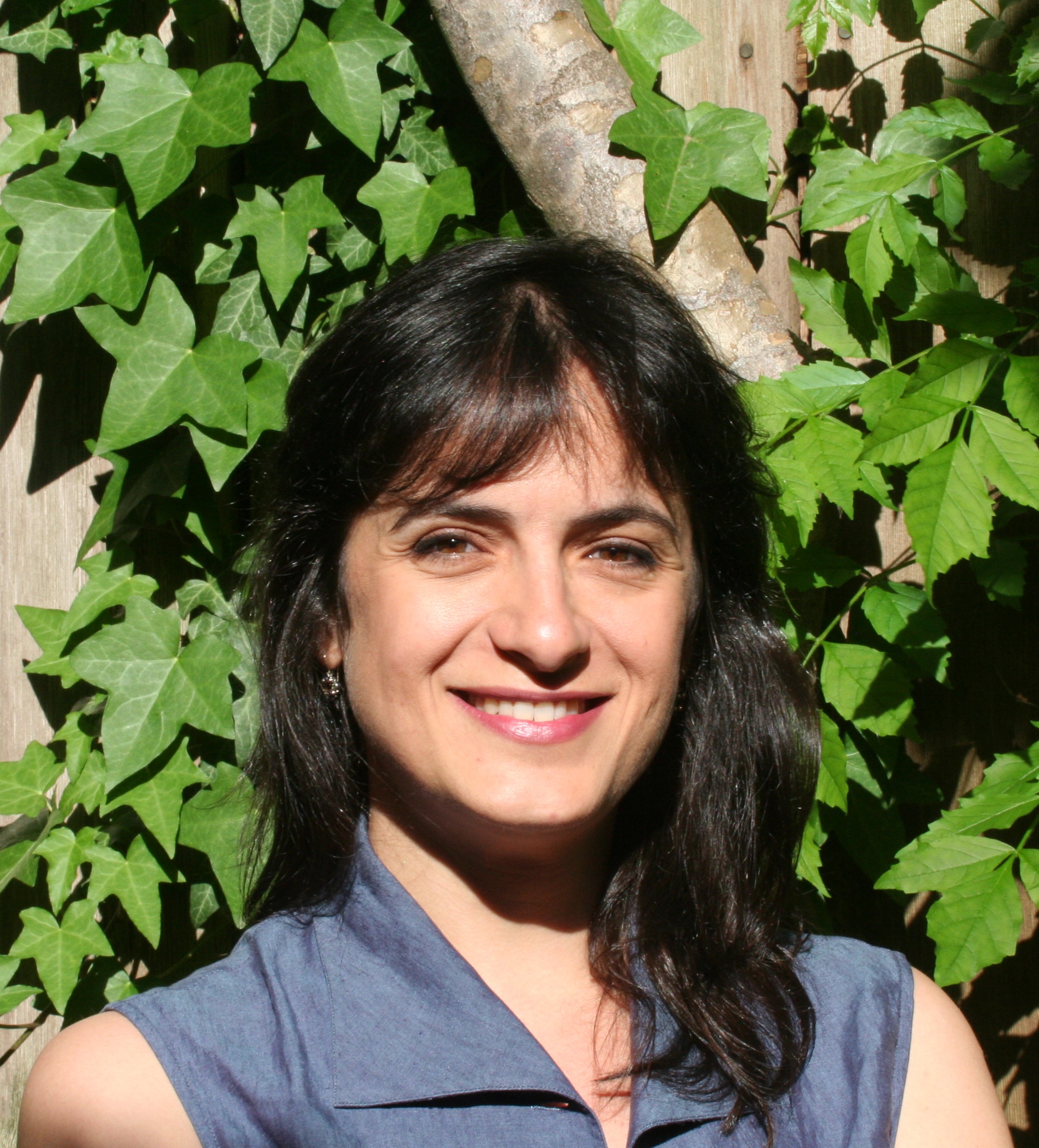
Elena is an economist, policy innovator, entrepreneur, and leader of Thought4Action, an action tank spearheading transformative policy reforms. Guided by a passion for practical innovation, she has revolutionised the concept of informality, a condition of socioeconomic marginalisation and insecurity affecting 5.8 billion humans -70% of the world’s population- 3+ in every 5 people globally.
Drawing from her experiences, including at the World Bank, the IMF, and as chief debt negotiator for the Greek Debt Crisis, she focuses on identifying bottlenecks in economic and political infrastructures and articulating innovative strategies to address them. Her work (IP-RCA) has improved the lives of 40 million people through a pioneering methodology that weaves theory and practice on the ground. Some of these people’s homes have increased in value from 12USD to 1MUSD (this is not a typo… M stands for Million). In her seminal book “Prosperity Unbound: Building Property Markets with Trust”, she challenges outdated development approaches and sets out a clear framework to tackle informality, which has since been successfully implemented in Peru, Bulgaria, the Middle East, Thailand, and elsewhere.
Her contribution to economics has initiated new research in institutional economics. The 2024 Nobel in Economics to Daron Acemoglu is a great representation of this, giving her encouragement to continue. She is well known for her ability to weave theory and practice on the ground with great results. In her writings she challenges outdated traditional development approaches and sets out a clear framework to tackle the informal economy. She has worked on more than 40 countries.
She was honoured with the IMPACT 2025 Award (video about her) from the ESG Committee of Excellence; The Human Flourishing Prize 2024; Innovation and Best Practice awards from the World Bank and a unique recognition of excellence and genius from the US Government, to name a few.
She appears routinely on broadcast TV (BFMTV, CNN, BBC), leading global media (Financial Times, The Guardian) and is a multiple-time TedX speaker. She is a faculty member at FSI’s Center for Democracy, Development, and the Rule of Law (CDDRL) at Stanford, and has taught at Johns Hopkins-SAIS, and INSEAD.